Memory Consolidation: How Stress Develops After Exposure To A Traumatic Event And What Can Be Done to Reduce It
Within a 72-hour time window of the event: 20+ minutes game play
Prefaced by recall of disturbing images from the event
Maximizing visuospatial interactions
Result: preventing intrusive memories of the event
Overview
In the hours immediately following exposure to a traumatic event, images of the event and accompanying emotional learning consolidate into memories. These can harden into intrusive memories that return to consciousness. Primarily images, but also smells, sounds, other sensations, these intrusive memories, based on their associated emotional learning, trigger distress. On a continuum, subsequent distress ranges from mild but upsetting levels, through “subthreshold posttraumatic stress disorder” features affecting social/work spheres and suicidality (Zlotnick et al., 2002) all the way to full-blown acute and posttraumatic stress disorders.
A growing body of research (James et al., 2015; Kessler et al., 2018; Kessler et al., 2019a; Kessler et al., 2019b; Iyadurai et al., 2019; Kanstrup et al., 2021; Thorarinsdottir et al. 2022; Singh et al., 2022; Highfield et al. 2025) shows that targeting and preventing the early formation of intrusive memories immediately after exposure to a traumatic event, using principles derived from memory consolidation studies, significantly reduces distress and its progression, “nipping it in the bud.” This demonstrates that:
- 20+ minutes of interacting with an online animation (game play)
- including visuospatial exercises: rotating game pieces in one’s mind in preparation for moving them,
- executing their movement,
- within a time window of 72 hours or less,
- while reexperiencing event hotspots (Gray & Holmes, 2008),
- reduces subsequent intrusive memories of disturbing imagery (flashbacks)
- a foundational element for acute and posttraumatic stress disorders
This approach targets a critical element, intrusive memories, implicated in subsequent development of disturbing levels of stress following exposure to a traumatic event. Most often experienced as images, these can also be sounds, smells, other triggering sensations. Intrusive memories can be experienced within current reality: they intrude as recall of a past, not current event. A subset of intrusive memories, flashbacks, dissociative experiences during which the person feels like they are reliving the events at the time they occurred, can blur this past-present time distinction.
Research
Games like Tetris are often used in these research studies and include visuospatial animation features, boosted further through customized settings. Playing these exercises prevents consolidation of memories following exposure to trauma. Before engaging in the game play, the user needs to recall hotspots, disturbing images from the event (Grey et al., 2008), Hoppe, et al., 2022). They are also instructed to focus on the complex mental movement of game pieces (mind’s eye perspective), a necessary component. Then, play for a minimum of 10 minutes, plus additional game play totaling 20+ minutes, all within the 72-hour time window. Booster sessions following the same protocol while optional (Kanstrup et al., 2021), in our opinion are useful: our adaptation of the protocol (see below), the “+” in “20+ minutes”.
Based on research that tests game animations that do not demonstrate results consistent with other recent studies (James et al., 2015; Asselbergs et al., 2018), we hypothesize that their design does not draw sufficient user-attention to the visuospatial component. This task must be made explicit in the instructions delivered to users (Singh, 2022). “Critically [emphasis added], participants were asked to ‘try to work out in your mind’s eye where best to place and rotate these [Tetris] blocks in order to make as many complete horizontal lines as you can and get the best score’ (Lau-Zhu et al., 2017). “The emphasis on mental rotation is key to ensure that the visuospatial demand of Tetris gameplay is maximised, as greater visuospatial demand has been associated with fewer subsequent intrusive memories…” (Kanstrup et al., 2020).
Another type of research result similarly demonstrated less frequency of intrusive memories but not reduced intensity. This research design using Tetris raised the question whether reducing the frequency of intrusive memories, which was demonstrated in this and other studies, is as helpful as reducing their intensity. Intensity, not measured in other studies, was measured in this study and did not occur. The research study’s authors also noted study limitations including differences between their sample population, who were exposed to a trauma film (see James, et al., 2016), and sample populations in other studies who had been exposed to real-life trauma events (Badawi, et al., 2022).
A research study done to determine if “proactive” playing of a game animation, prior to exposure to a trauma event (film), is helpful, reported that there were no differences in intrusive memory frequencies between a control group and the group using the intervention (James et al., 2016b). It appears that cognitive inoculation prior to event exposure does not produce positive results.
While there is emerging research evidence for the efficacy of the approach delivered in the time-window following an event, that includes explicit attention by subjects to visuospatial visualization and manipulation, researchers often qualify results with the need for more research in order to conclusively demonstrate usefulness, as well as better determine which features need to be included/maximized to achieve the best results.
With this research in mind, as well as the adage ‘the perfect need not be the enemy of the good,’ plus the overall safety of these strategies when following safe-use protocols, we have designed a game animation app. It is available to potential users who are encouraged to weigh the pros and cons of utilizing it.
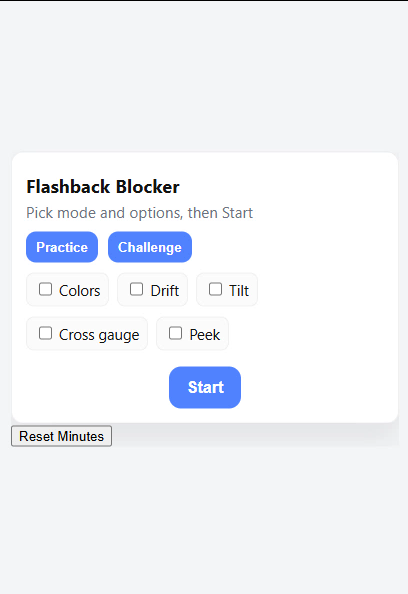
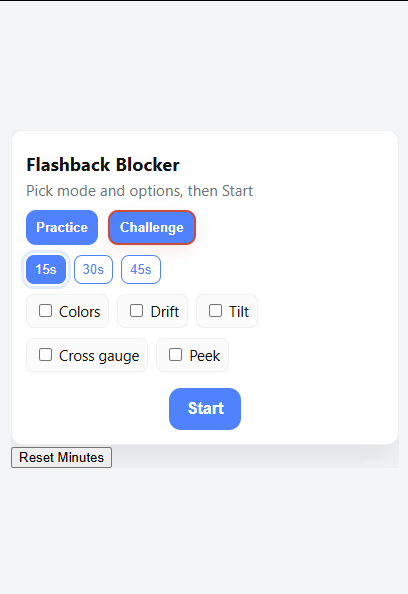
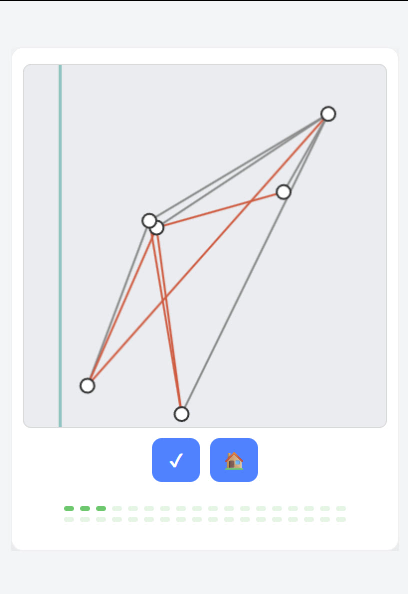
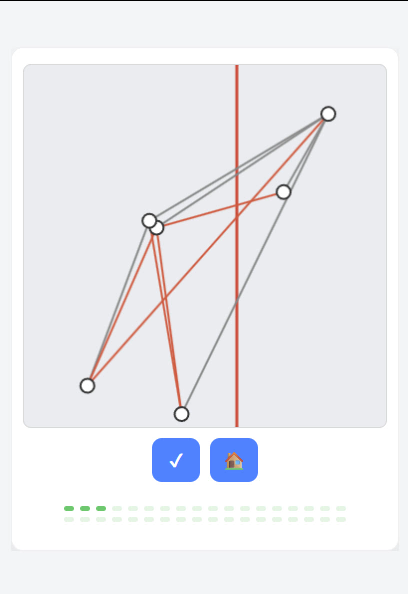
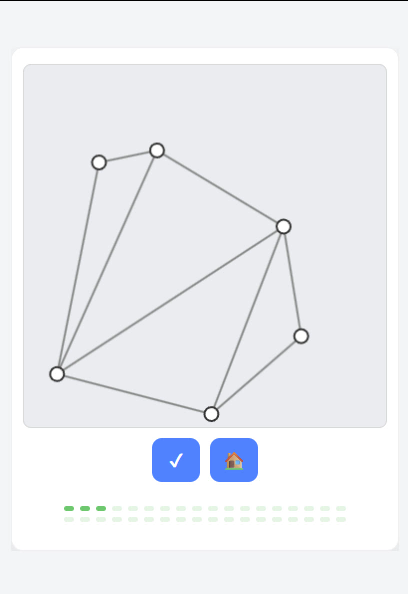
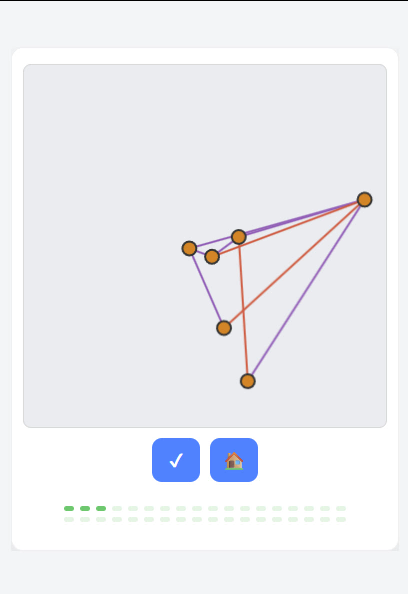
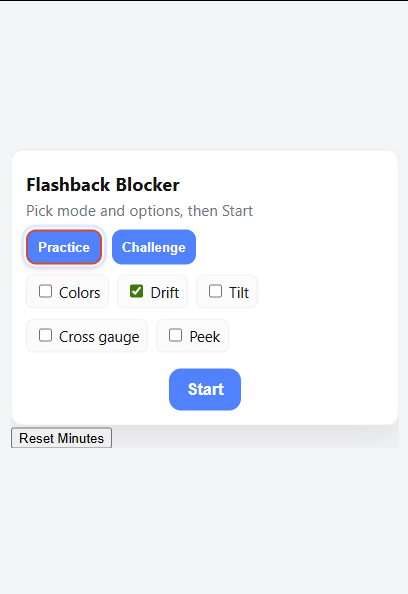
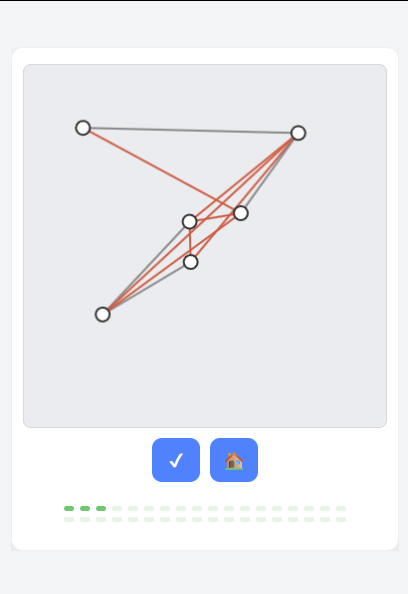
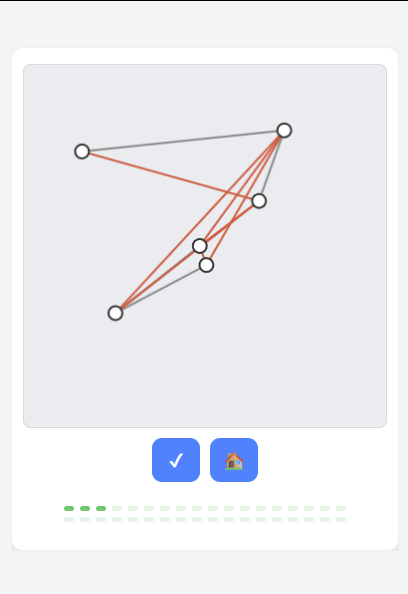
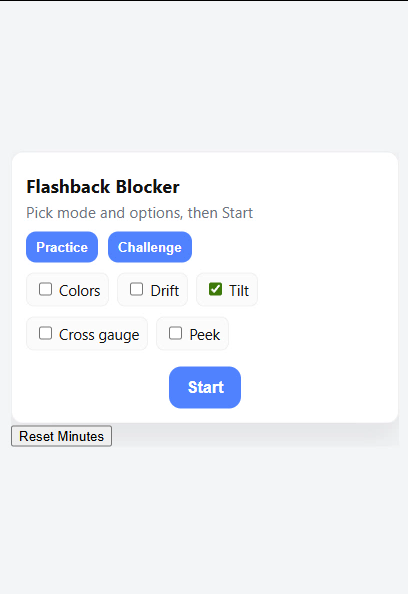
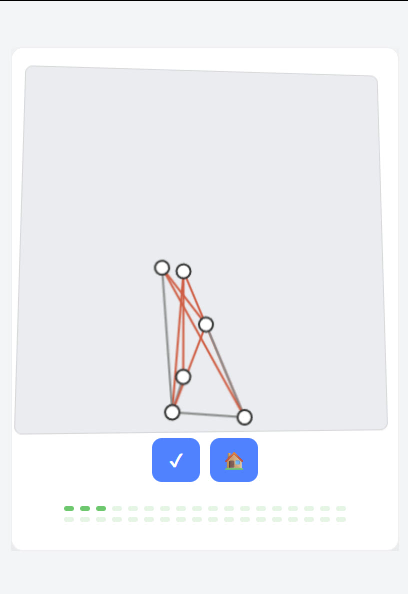
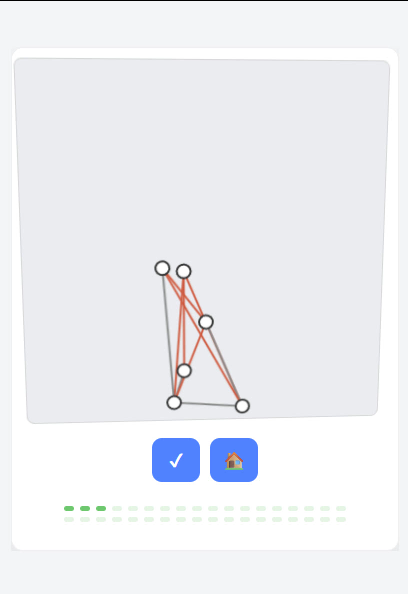
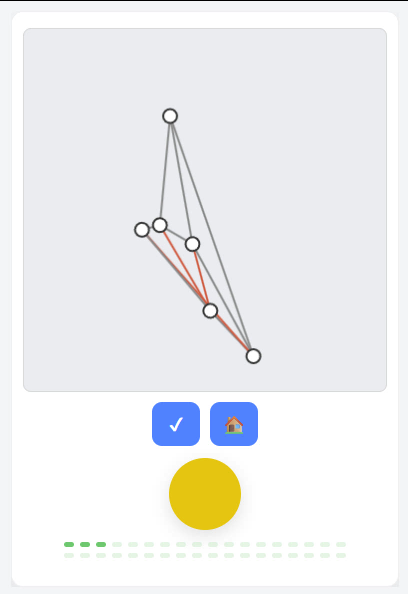
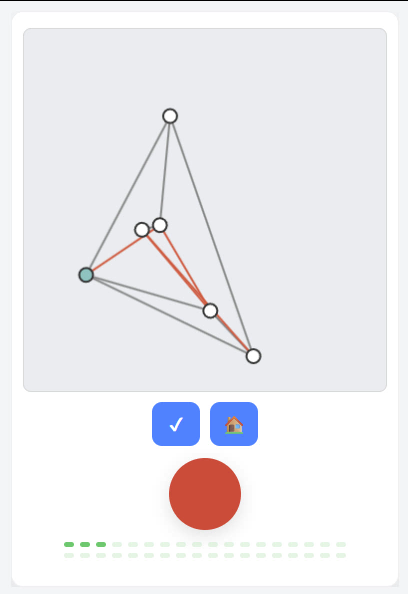
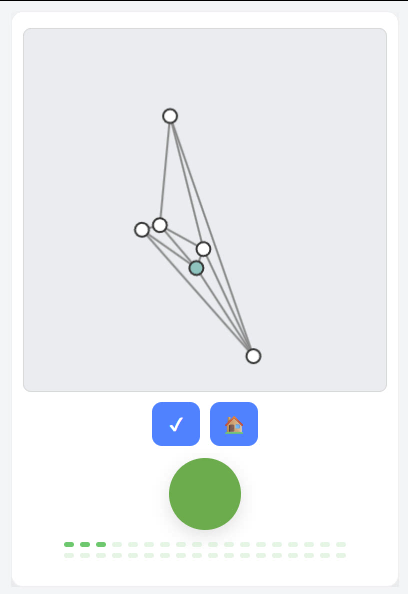
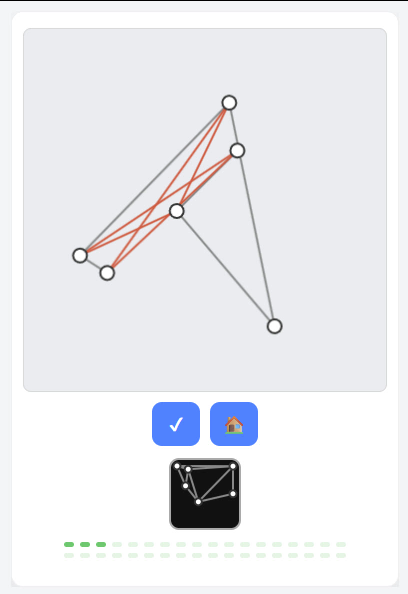
The Flashback Blocker app design maximizes features identified above by this growing body of research. It achieves high visuospatial demand through (1) mental rotation, (2) moving pieces, (3) a range of optional additional effects and features that compete with the main tasks and (4) optional time pressure to complete each round.
A word about on-going or historical, repeated traumatization, sometimes referred to as “complex trauma” (Herman, 1992; Courtois, 2008). Characterized by continuing repeated exposure to traumatizing events (for example, domestic violence, sexual abuse), past or present, and consolidated memories, help for resulting traumatization is best addressed with the help of a behavioral healthcare professional. Flashback prevention using the app is designed for use (1) within the memory consolidation time window (~ 72 hours) and (2) after a single traumatic event that is not part of an ongoing, repeated pattern of traumatic exposure (complex trauma).
After 72 hours, when memory has consolidated, a different strategy, for example, those based on a therapeutic reconsolidation process (TRP), is needed to address single event traumatization as well as multiple event (complex) traumatization. There are several research-validated, TRP-based strategies including the Rewind Technique (RT), EMDR, Coherence Therapy that can be used to help with this. More about this in Memory Consolidation below.
The web app is available through free membership (a 5-day trial) and paid membership (a 30-day access). The flashback prevention tools can be self-administered following a protocol viewable in the app and below. As noted above, its active ingredients distill down to high visuospatial demand increased by a user’s motivation to successfully solve puzzles in each round.
The protocol’s time window: complete exercise (20+ minutes of game play) up to 72 hours following event.

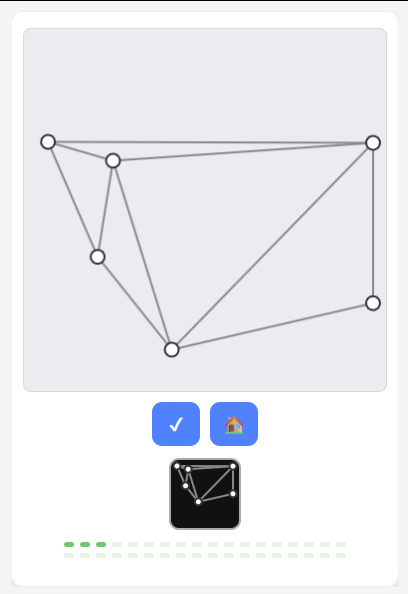
Exercise
Flashback Blocker:
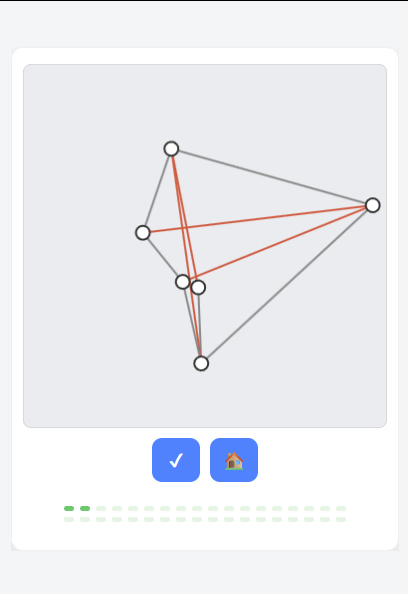
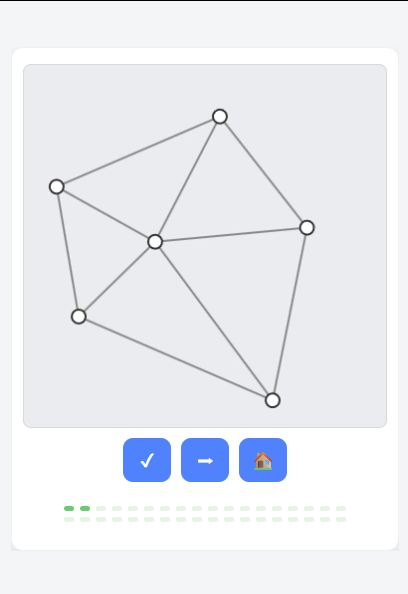
Prevention using mental rotation skills while node/line dragging.
Time window: complete up to 72 hours following event.
Safe, quiet location.
Before game play, recall images of worst moments (hotspots).
Activating your mental rotation skills is critical to the exercise.
Focus your mind’s eye on rotating and moving nodes/lines.
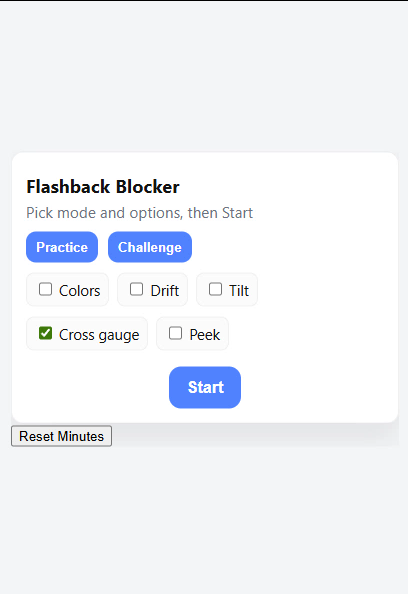
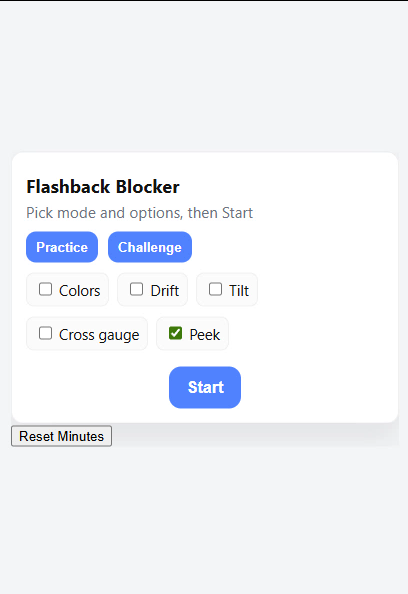
Use practice mode to try out puzzle solving.
Use challenge mode and timed play (15 seconds-most difficult, 30 seconds-medium difficulty or 45 seconds-least difficult) seconds)
Play a minimum of 10 minutes in the first round. Then complete another 10+ minutes within the 72-hour time window.
OK to engage in additional booster sessions of game play following the same protocol: (1) safe, quiet location, (2) event recall followed by exercise, (3) concentrating on mental rotation of nodes/lines to improve engage use of mental rotation.
Result: reduce intrusive memories that later trigger disturbing stress.
After the 72-hour event-exposure time window (the time during which memory consolidation occurs), disturbing effects of acute or posttraumatic stress, if experienced, can be reduced through activating memory reconsolidation.
Memory Reconsolidation: Emotional Relearning in Two Steps
Step1: Recall and Re-experience Emotionally Upsetting Memory
Step 2: Apply a Range of Experiential Exercises
Result: Memory’s Disturbing Emotional Component Relearned/Reduced/Removed
Overview
If more than 72 hours have elapsed after experiencing a traumatic event, memory has likely already consolidated. To ameliorate any trauma after-effects, we suggest consulting with a healthcare provider about the best path forward.
- consult with a behavioral healthcare professional who can help you evaluate options, deliver recommended help, incorporate and facilitate self-administered tools and be available to help you plan, redesign strategies based on progress.
- Consider using a buddy system. A feature of many methods based on memory consolidation is that content of the trauma is not routinely shared. You can keep it private. Your buddy would not know the content of the trauma.
What follows is a discussion of a sound model based on memory reconsolidation to help you learn more and be better able to make an informed choice.
more detail
Emotional Relearning
We respond to a new experience using our memories of how we responded to similar experiences in our past. Our memories become response templates for how we next respond to a similar encounter.
These memories/response templates are comprised of thinking, feeling and doing components, any or all of which can be changed through relearning.
Once changed these relearned templates are reconsolidated back into memory storage as blueprints.
A name given to this process applied to relearning and reconsolidating the emotional component of a memory is the therapeutic reconsolidation process or TRP.
A powerful, self-amplifying process, TRP, focused on a central disturbing memory, alters its emotional component, associated thoughts and behaviors, leaving a new template, stripped of its negative emotionality while reinforcing adaptive thinking and acting.
More About TRP
Neuroscience discoveries over the past 2 decades have provided a new understanding of how memory is maintained and updated. Called memory reconsolidation, this understanding, when applied, results in the relearning of troubling emotions.
When several widely-used, experiential helping techniques are boiled down to their active ingredients, a common pathway for triggering change can be identified. Based on memory reconsolidation, it is called TRP.
There are self-administered, self-help versions of TRP techniques.
A buddy system can be used as a way to add support to self-administered TRP exercises.
One of these exercises is based on matching/entraining a sound frequency to a mind’s eye image of a disturbing event, then changing the frequency, triggering the relearning of the troubling emotion (binaural sound screenshots below).
Another of these, the bilateral sound and visual exercise, uses synchronized bilateral sound and visual movements while picturing event hotspot images which are likely to be accompanied by other sensory experiences of the event.
Both tools depend on memory reconsolidation as applied using TRP.
Memory reconsolidation depends on picturing and reactivating/reexperiencing memories of the traumatic event (see point 2 in the introductory memory reconsolidation paragraph above).
An additional self-help SUDS measure is available to support and strengthen these tools through measuring stress levels and if needed suggesting that you undertake stress- reducing strategies.
An extensive reference list is appended documenting sources and additional readings.
Sound Strategies: TRP Applied to Sound
When we play a sound tone through stereo headphones, we hear it through both our left and right ears. If the tone is within a specific range and the difference between its left ear and right ear frequencies is within another specific range, our brain can detect the difference, and we hear a binaural beat. Binaural beats create an auditory illusion, sounding like a rhythmic beat. Sustained listening to binaural beats influences our brain, producing associated brain waves. Neuroscientists mention two possible synchronization mechanisms, entrainment and interhemispheric coherence (Garcia-Argibay et al., 2019, p 358). Binaural beats reportedly “can affect mood, performance on vigilance tasks, and anxiety” (Le Scouarnec et al., 2001).
Research has been done on these effects. These have shown that Binaural beats have been used in a wide-range of exercises to reduce pain perception and anxiety (Garcia-Argibay et al., 2019) as well as to promote relaxation, meditation (Jirakittayakorn & Wongsawat, 2017) and healing. For example, binaural beats have been used to reduce anxiety in patients undergoing (1) day surgery so they can be “street ready” quickly following the procedure (Padmanabhan et al., 2005) and (2) dental surgery (Isik et al., 2017). Both report significant anxiety reduction in pre-operative patients. However, remaining uncertainty about mechanisms and efficacy indicate a need for further research (Orozco Perez et al., 2020). The following strategies are presented with this caveat in mind.
Reconsolidation-Based Sound Model
RESET is a reconsolidation-based treatment model that uses binaural beats to target PTSD. While binaural beats are usually generated as “sine” waves which have a pleasant sound, RESET uses a “square” wave pattern to generate binaural beats, creating a grating sound. RESET developed by Lindenfeld and colleagues (Bruursema & Lindenfeld, 2015; Lindenfeld et al., 2019a, Lindenfeld et al., 2019b; personal communication, September 6, 2020, Lindenfeld et al., 2020, Lindenfeld et al., 2021), integrates neurofeedback into a reconsolidation protocol.
more details
RESET uses a neurofeedback hardware device (Bio-Acoustical Utilization Device or BAUD) supplemented by measuring equipment to map the brain (for example, surface qEEG and LORETA analysis, Lindenfeld et al, 2019a) to determine the brain’s emotional frequencies, identifying the unique frequency activated and locked into place by the initial traumatic experience. RESET employs silent recall of the traumatic event to reactivate the locked frequency. Details of the event are not verbally shared, so the exercise, if facilitated by a helper, is “contentless.” A way to view this process: once the binaural beats are entrained to the reactivated brain frequency, a TRP mismatch is set in motion by changing this entrained binaural sound to one with less painful associated emotions. This unlocks and resets the reactivated frequency, triggering reconsolidation, resulting in symptom relief.
CT has an in-depth explanation of how a similar process meets TRP through “dual focus” in NLP (Ecker, 2015). Ecker hypothesizes that in a group of therapies including NLP, tapping and progressive counting, attention is anchored to a sensory stimulus in a safe, external environment while the person attends internally to upsetting emotional learning, triggering critical emotional learning through this juxtaposition and mismatch, causing the new emotional learning (Ecker, 2015).
A binaural beats exercise, in my view, utilizes a similar therapeutic process. Additional fMRI-based research is needed to refine understanding of these mechanisms (Lindenfeld, personal communication, September 6, 2020). However, while the hypothesis to explain these underlying mechanisms is in “early days,” needing refinement, end results demonstrate efficacy. The core mechanism triggering memory reconsolidation, an empirically confirmed process of annulment (ECPA, Ecker & Vaz, 2022) is likely present.
Weighing pros and cons: for people already suffering from (1) intrusive, unbidden re-living of trauma or (2) circumscribed life-styles due to a phobia, potential benefits of a helping protocol that includes re-experiencing a troubling event, coupled with available safeguards plus stress reduction can be weighed against a time-limited emotional upset.
While binaural beats have all been used as sources in recent times, music has been used for millennia to promote relaxation, reduce stress and heal. Music therapy, an outgrowth of this traditional use of music, can, for example, empathically begin with music attuned (entrained) to a person’s thoughts and feelings and gently alter these by introducing different music (Leone, 2023).
Music therapy strategies that invite the person helped to choose their own sounds and music improve the likelihood that these will match targeted memories and emotions (Raglio, 2023). Sound-based exercises use similar processes. For example, in addition to choosing and adjusting binaural sound frequencies and embedding these in pre-set music (download chakra sounds linked in Resources below), a person can upload their own music in which to embed frequencies.
Note: we recommend an initial consultation with a behavioral healthcare professional.
Resources
Download Chakra mp3’s for use in the Flashback Blocker prevention app: right-click/touch, “save as” to location on device, then use the feature’s “browse” button to open/play the saved sound.
downloads
References (memory consolidation and memory reconsolidation)
details
Adams, S. & Allan, S. (2018) Muss’ Rewind treatment for trauma: description and multisite pilot study, Journal of Mental Health, 27:5, 468-474.
Adams, S. and Allan, S. (2019), “Human givens rewind trauma treatment: description and conceptualisation”, Mental Health Review Journal, Vol. 24 No. 2, pp. 98-111.
Adams, S., Allan, S., Andrews, W. et al. Four practice-based preliminary studies on Human Givens Rewind treatment for posttraumatic stress in Great Britain [version 2; peer review: 1 approved, 1 approved with reservations]. F1000Research 2022, 9:1252 (https://doi.org/10.12688/f1000research.25779.2).
Asselbergs, J., Sijbrandij, M., Hoogendoorn, E., Cuijpers, P., Olie, L., Oved, K., Merkies, J., Plooijer, T., Eltink, S., & Riper, H. (2018). Development and testing of TraumaGameplay: An iterative experimental approach using the trauma film paradigm. European Journal of Psychotraumatology, 9(1), Article 1424447. https://doi.org/10.1080/20008198.2018.1424447.
Astill Wright, L., Barawi, K., Kitchiner, N., Kitney, D., Lewis, C., Roberts, A., Roberts, N., Simon, N., Ariti, C., Nussey, I., Muss, D. & Bisson, J. (2023). Rewind for Posttraumatic Stress Disorder: A Randomised Controlled Trial. Depression and Anxiety. 2023. 1-11.10.1155/2023/6279649.
Astill Wright, L., Horstmann, L., Holmes, E. A., & Bisson, J. I. (2021a). Consolidation/reconsolidation therapies for the prevention and treatment of PTSD and re-experiencing: a systematic review and meta-analysis. Translational psychiatry, 11(1), 453. https://doi.org/10.1038/s41398-021-01570-w
Astill Wright, L., Barawi, K., Simon, N., Lewis, C., Muss, D., Roberts, N. P., Kitchiner, N. J., & Bisson, J. I. (2021b). The reconsolidation using rewind study (RETURN): trial protocol.
European journal of psychotraumatology, 12(1), 1844439. https://doi.org/10.1080/20008198.2020.1844439.
Badawi, A., Berle, D., Rogers, K., & Steel, Z. (2020). Do cognitive tasks reduce intrusivememory frequency after exposure to analogue trauma? An experimental replication. Clinical Psychological Science, 8(3), 569–583. https://doi.org/10.1177/2167702620906148.
Badawi, A., Steel, Z. & Berle, D. (2022). Visuospatial Working Memory Tasks May Not Reduce the Intensity or Distress of Intrusive Memories. Frontiers in Psychiatry. 13.10.3389/fpsyt.2022.769957.
Bruursema, L. Richard & Lindenfeld, George. (2015). Resetting the Fear Switch in PTSD: A Novel Treatment Using Acoustical Neuromodulation to Modify Memory Reconsolidation. DOI:10.13140/RG.2.1.4695.9446.
Courtois, C. A. (2008). Complex Trauma, Complex Reactions: Assessment and Treatment. Psychological Trauma: Theory, Research, Practice, and Policy, 2008, Vol. S, No. 1, 86–100.
Ecker, B., Ticic, R., & Hulley, L. (2012). Unlocking the emotional brain: Eliminating symptoms at their roots using memory reconsolidation. New York, NY: Routledge.
Ecker, B., Ticic, R., & Hulley, L., (2013). A Primer on memory reconsolidation and its psychotherapeutic use as a core process of profound change. The Neuropsychotherapist. 1, 82-99.
Ecker, B. (2015a). Memory reconsolidation understood and misunderstood. International Journal of Neuropsychotherapy, 3(1), 2–46.
Ecker, B., Hulley, L., & Ticic, R. (2015b). Minding the findings: Let’s not miss the message of memory reconsolidation research for psychotherapy. The Behavioral and brain sciences, 38, e7. https://doi.org/10.1017/S0140525X14000168.
Ecker, B. (2015c). Using NLP for memory reconsolidation: A glimpse of integrating the panoply of psychotherapies. The Neuropsychotherapist, 10, 50–56. doi:10.12744/tnpt(10)050-056.
Ecker, B. (2018). Clinical translation of memory reconsolidation research: Therapeutic methodology for transformational change by erasing implicit emotional learnings driving symptom production. International Journal of Neuropsychotherapy, 6(1), 1–92.
Ecker, B. & Hulley, L. (2019). Coherence Therapy: Practice manual and training guide, v190105. Oakland: Coherence Therapy Psychology Institute, LLC.
Ecker, B., Bridges, S.K. (2020). How the Science of Memory Reconsolidation Advances the Effectiveness and Unification of Psychotherapy. Clin Soc Work J (2020).
Ecker, B. & Vaz, A. (2022). Memory reconsolidation and the crisis of mechanism in psychotherapy. New Ideas in Psychology, 66 (2022), Article 100945.
Ecker, B., Ticic, R. & Hulley, L. (2024a). Unlocking the Emotional Brain, Memory Reconsolidation and the Psychotherapy of Transformational Change, Second Edition. New York: Routledge, Taylor & Francis Group.
Ecker, B. (2024b). A proposal for the unification of psychotherapeutic action understood as memory modification processes. Journal of Psychotherapy Integration.10.1037/int0000330.
Ellis, L. (2017). The potential mechanism of musicogenic epilepsy and future research avenues, Bioscience Horizons: The International Journal of Student Research, Volume 10, 2017, hzx004, https://doi.org/10.1093/biohorizons/hzx004.
Garcia-Argibay, M., Santed, M.A. & Reales, J.M. (2019). Efficacy of binaural auditory beats in cognition, anxiety, and pain perception: a meta-analysis. Psychological Research 83, 357–372 (2019). https://doi.org/10.1007/s00426-018-1066-8.
Grey N., Holmes E.A. (2008). “Hotspots” in trauma memories in the treatment of posttraumatic stress disorder: A replication. Memory. 2008;16:788–796. [PubMed: 18720224].
Goldman, R., & Fredrick-Keniston, A. (2020). Memory reconsolidation as a common change process: Moving toward an integrative model of psychotherapy. In R. D. Lane (Ed.), Neuroscience of enduring change: Implications for psychotherapy (pp. 328–359). Oxford University Press. https://doi.org/10.1093/oso/9780190881511.003.0013.
Gray, R. M. (2011). NLP and PTSD: The Visual-Kinesthetic Dissociation Protocol. Current Research in NLP: Proceedings of 2010 Conference, 2(1), 33-42.
Gray, R. M., Budden-Potts, D., Schwall, R. J., & Bourke, F. F. (2020, November 19). An Open-Label, Randomized Controlled Trial of the Reconsolidation of Traumatic Memories Protocol (RTM) in Military Women. Psychological Trauma: Theory, Research, Practice, and Policy. Advance online publication. http://dx.doi.org/10.1037/tra0000986
Grifoni, J., Pagani, M., Persichilli, G., Bertoli, M., Bevacqua, M.G., L’Abbate, T., Flamini, I., Brancucci, A., Cerniglia, L., Paulon,L., et al. Auditory Personalization of EMDR Treatment to Relieve Trauma Effects: A Feasibility Study [EMDR+]. Brain Sci. 2023, 13, 1050. https:// doi.org/10.3390/brainsci13071050.
Hochman, J. (2007). Brief Imagery Therapy: Ahsen’s 10-Session Model. New York: Brandon House.
Herman, J. L. (1992). Complex PTSD: A Syndrome in Survivors of Prolonged and Repeated Trauma. Journal of Traumatic Stress, Vol. 5, No. 3, 1992.
Highfield, J., Iyadurai, L., & Holmes, E. A. (2025). A summary review of the development of using a brief imagery-competing task intervention (ICTI) for reducing intrusive memories of psychological trauma: applications in healthcare settings for both staff and patients. Discover mental health, 5(1), 78. https://doi.org/10.1007/s44192-025-00205-6.
Holmes, E. A., James, E. L., Coode-Bate, T., & Deeprose, C. (2009). Can Playing the Computer Game “Tetris” Reduce the Build-Up of Flashbacks for Trauma? A Proposal from Cognitive Science. PLoS ONE 4(1): e4153. https://doi.org/10.1371/journal.pone.0004153.
Holmes, E. A., James, E. L., Kilford, E. J. & Deeprose, C. (2010) Key Steps in Developing a Cognitive Vaccine against Traumatic Flashbacks: Visuospatial Tetris versus Verbal Pub Quiz. PLoS ONE 5(11): e13706. https://doi.org/10.1371/journal.pone.0013706.
Holmes, E. A., James, E. L., Killford, E. J., & Deeprose, C. (2012). Correction: Key Steps in Developing a Cognitive Vaccine against Traumatic Flashbacks: Visuospatial Tetris versus Verbal Pub Quiz. PLOS ONE 7(11): 10.1371/annotation/eba0a0c8-df20-496b-a18429e30b8d74d0. https://journals.plos.org/plosone/article?id=10.1371/annotation/eba0a0c8-df20-496ba184-29e30b8d74d0.
Holmes, E. A., Hales, S. A., Young, K., & Di Simplicio, M. (2019). Imagery-based cognitive therapy for bipolar disorder and mood instability. The Guilford Press.
Hoppe, J.M., Walldén, Y.S.E., Kanstrup, M., Singh, L., Agren, T., Holmes, E.A., Moulds, M.L. Hotspots in the immediate aftermath of trauma – Mental imagery of worst moments highlighting time, space and motion. Conscious Cogn. 2022 Mar;99:103286. doi:10.1016/j.concog.2022.103286. Epub 2022 Feb 24. PMID: 35220032.
Ingendoh, R.M., Posny, E.S., Heine, A. (2023). Binaural beats to entrain the brain? A systematic review of the effects of binaural beat stimulation on brain oscillatory activity, and the implications for psychological research and intervention. PLoS ONE 18(5): e0286023. https://doi.org/10.1371/journal.pone.0286023.
Iyadurai L., Blackwell, S. E., Meiser-Stedman, R., Watson, P. C., Bonsall, M.B., Geddes, J, R., De Ozorio Nobre, A. C. & Holmes, E. A. (2017). Preventing Intrusive Memories after Trauma via a Brief Intervention Involving Tetris Computer Game Play in the Emergency Department: A Proof-of-Concept Randomized Controlled Trial. Mol Psychiatry. 2017 Mar 28.
Iyadurai, L. et al. (2019). Intrusive memories of trauma: a target for research bridging cognitive science and its clinical application. Clin. Psychol. Rev. 69, 67–82 (2019).
James, E. L., Bonsall, M. B., Hoppitt, L., Tunbridge, E. M., Geddes, J. R., Milton, A. L., & Holmes, E. A. (2015). Computer Game Play Reduces Intrusive Memories of Experimental Trauma via Reconsolidation-Update Mechanisms. Psychological science, 26(8), 1201– 1215. https://doi.org/10.1177/0956797615583071.
James, E. L., Lau-Zhu, A., Clark, I. A., Visser, R. M., Hagenaars, M. A., & Holmes, E. A. (2016a). The trauma film paradigm as an experimental psychopathology model of psychological trauma: Intrusive memories and beyond. Clinical Psychology Review, 47, 106–142. https://doi.org/10.1016/j.cpr.2016.04.010.
James, E. L., Lau-Zhu, A., Tickle, H., Horsch, A., & Holmes, E. A. (2016b). Playing the computer game tetris prior to viewing traumatic film material and subsequent intrusive memories: Examining proactive interference. Journal of Behavior Therapy and Experimental Psychiatry, 53, 25–33. https://doi.org/10.1016/j.jbtep.2015.11.004.
Jiang, C., Chen, W., Tao, L., Wang, J., Cheng, K., Zhang,Y., Qi Z and Zheng, X. (2023). Game-matching background music has an add-on effect for reducing emotionality of traumatic memories during reconsolidation intervention. Front. Psychiatry 14:1090290. doi: 10.3389/fpsyt.2023.1090290.
Jirakittayakorn, N. & Wongsawat, Y. (2017). Brain Responses to a 6-Hz Binaural Beat: Effects on General Theta Rhythm and Frontal Midline Theta Activity. Front. Neurosci. 11:365. doi: 10.3389/fnins.2017.00365.
Kanstrup, M., Kontio, E., Geranmayeh, A., Olofsdotter Lauri, K., Moulds, M. L., & Holmes, E. A. (2020). A single case series using visuospatial task interference to reduce the number of visual intrusive memories of trauma with refugees. Clinical Psychology & Psychotherapy, 28(1), 109-123. https://doi.org/10.1002/cpp.2489.
Kanstrup, M., Singh, L., Göransson, K.E. et al. (2021). Reducing intrusive memories after trauma via a brief cognitive task intervention in the hospital emergency department: an exploratory pilot randomised controlled trial. Transl Psychiatry11, 30 (2021). https://doi.org/10.1038/s41398-020-01124-6.
Kanstrup, M., Singh, L., Leehr, E.J. et al. (2024). A guided single session intervention to reduce intrusive memories of work-related trauma: a randomised controlled trial with healthcare workers in the COVID-19 pandemic. BMC Med22, 403 (2024). https://doi.org/10.1186/s12916-024-03569-8.
Kessler, H., Holmes, E. A., Blackwell, S. E., Schmidt, A.-C., Schweer, J. M., Bücker, A., Herpertz, S., Axmacher, N., & Kehyayan, A. (2018). Reducing intrusive memories of trauma using a visuospatial interference intervention with inpatients with posttraumatic stress disorder (PTSD). Journal of Consulting and Clinical Psychology, 86(12), 1076– 1090. https://doi.org/10.1037/ccp0000340.
Kessler, H., Schmidt, A.-C., James, E.L., Blackwell, S.E., von Rauchhaupt, M., Harren, K., Kehyayan, A., Clark, I.A., Sauvage, M., Herpertz, S., Axmacher, N., Holmes, E.A. (2019a). Visuospatial computer game play after memory reactivation delivered three days after a traumatic film reduces the number of intrusive memories of the experimental trauma, Journal of Behavior Therapy and Experimental Psychiatry (2019), doi: https://doi.org/10.1016/j.jbtep.2019.01.006.
Kessler, H., Dangellia, L., Kessler, R., Mahnke, V., Herpertz, S., & Kehyayan, A. (2019b). Mobilum-a new mobile app to engage visuospatial processing for the reduction of intrusive visual memories. mHealth, 5, 49. https://doi.org/10.21037/mhealth.2019.09.15.
Lane, R. D., Nadel, L., Greenberg, L., & Ryan, L. (2015). The integrated memory model: A new framework for understanding the mechanisms of change in psychotherapy. Behavioral and Brain Sciences, 38, Article e30. https://doi.org/10 .1017/S0140525X15000011.
Lau-Zhu, A., Holmes, E.A., Butterfield, S., Holmes, J. (2017). Selective Association Between Tetris Game Play and Visuospatial Working Memory: A Preliminary Investigation. Appl Cogn Psychol. 2017 Jul-Aug;31(4):438-445. doi: 10.1002/acp.3339. Epub 2017 Jul 12. PMID: 29540959; PMCID: PMC5836929.
Leone, R. (2023, August 25). ON YOUR MIND. Music can serve as therapy. Here’s how it can reduce anxiety. Washington Post. https://www.washingtonpost.com/wellness/2023/08/25/music-therapy-reduce-anxietystrategies/
Le Scouarnec, R. P., Poirier, R. M., Owens, J. E., Gauthier, J., Taylor, A. G. & Foresman, P. A. (2001). Use of binaural beat tapes for treatment of anxiety: a pilot study of tape preference and outcomes. Alternative Therapies in Health and Medicine 2001; 7: 58–63.
Lindenfeld, G., Rozelle, G., Hummer, J., Sutherland, M. R., & Miller, J. C. (2019a). Remediation of PTSD in a combat veteran: A case study. NeuroRegulation, 6(2), 102–125. https://doi.org/10.15540/nr.6.2.102.
Lindenfeld, G., Rozelle, G., Soutar, R., Hummer, J., & Sutherland, M. (2019b, Winter). Post-traumatic stress remediated: A study of eight combat veterans. New Mind Journal. Retrieved from http://nmindjournal.com/post-traumatic-stress-remediated-a-pilot-studyof-8-combat-veterans/.
Lindenfeld, G. L., Hummer, J.T. and Billiot, K. (2021). Anger and Aggression: A New Beginning? Family Court Review, 59: 161-170. https://doi.org/10.1111/fcre.12538.
McConnell, J. & Quinn, J.G. (2004). Complexity factors in visuo-spatial working memory. Memory, 12, 338-350.
Muss, D. C. (1991), A new technique for treating post-traumatic stress disorder. British Journal of Clinical Psychology, 30: 91–92.
Muss, D. (2012). The Trauma Trap (revised edition). Kindle Desktop version. Retrieved from Amazon.com.
Muss, D. (2022). APPEAL TO ALL UKRAINIAN / POLISH THERAPISTS,PSYCHOLOGISTS,,COUNSELLORS, SOCIAL WORKERS,ETC. [Post]. Linkedin. https://www.linkedin.com/posts/dr-david-c-muss-m-d-49628014_ptsd-rewind-therapy-live-session-for-the-activity-6922507843908608000-FqEZ/?trk=public_profile_like_view&originalSubdomain=uk.
Orozco Perez, H. D., Dumas, G. & Lehmann, A. (2020). Binaural Beats through the Auditory Pathway: From Brainstem to Connectivity Patterns.eNeuro.2020;7(2):
ENEURO.0232-19.2020. Published 2020 Mar 19. doi:10.1523/ENEURO.0232-19.2020.
Padmanabhan, R., Hildreth, A. J., & Laws, D. (2005). A prospective, randomised, controlled study examining binaural beat audio and pre-operative anxiety in patients undergoing general anaesthesia for day case surgery. Anaesthesia, 60(9), 874–877. https://doi.org/10.1111/j.1365-2044.2005.04287.x.
Propper, R. E., Pierce, J., Geisler, M. W., Christman, S. D., & Bellorado, N. (2007). Effect of bilateral eye movements on frontal interhemispheric gamma EEG coherence: Implications for EMDR therapy. Journal of Nervous and Mental Disease, 195(9), 785–788. https://doi.org/10.1097/NMD.0b013e318142cf73.
Propper, R. E., & Christman, S. D. (2008). Interhemispheric interaction and saccadic horizontal eye movements: Implications for episodic memory, EMDR, and PTSD. Journal of EMDR Practice and Research, 2(4), 269–281. https://doi.org/10.1891/933-3196.2.4.269.
Quinn J. G. & McConnell, J. (1996). Irrelevant pictures in visual working memory. Quarterly Journal of Experimental Psychology, 49A, 200-215.
Raglio, A. (2023). A novel music-based therapeutic approach: the Therapeutic Music Listening. Front. Hum. Neurosci. 17:1204593. doi: 10.3389/fnhum.2023.1204593.
Singh, L., Kanstrup, M., Gamble, B., Geranmayeh, A., Göransson, K.E., Rudman, A., Dahl, O., Lindström, V., Hörberg, A., Holmes, E.A., Moulds, M.L. (2022). A first remotely-delivered guided brief intervention to reduce intrusive memories of psychological trauma for healthcare staff working during the ongoing COVID-19 pandemic: Study protocol for a randomiised controlled trial. Contemp Clin Trials Commun. 2022 Apr;26:100884. doi: 10.1016/j.conctc.2022.100884. Epub 2022 Jan 12. PMID: 35036626; PMCID: PMC8752164.
Thirkettle, M., Lewis, J., Langdridge, D., Pike, G. A. (2018). Mobile App Delivering a Gamified Battery of Cognitive Tests Designed for Repeated Play (OU Brainwave): App Design and Cohort Study. JMIR Serious Games 2018;6(4):e10519. doi: 10.2196/10519.
Thorarinsdottir, K., Holmes, E.A., Hardarson, J., Stephenssen, E.S., Jonasdottir, M.H., Kanstrup, M., Singh, L., Hauksdottir, A., Halldorsdottir, T., Gudmundsdottir, B., Thordardottir, E., Valdimarsdottir, U., Bjornsson, A. (2022). Using a Brief Mental Imagery Competing Task to Reduce the Number of Intrusive Memories: Exploratory Case Series With Trauma-Exposed Women. JMIR Form Res. 2022 Jul 20;6(7):e37382. doi: 10.2196/37382. PMID: 35857368; PMCID: PMC9491830.
Tylee, D.S., Gray, R., Glatt, S. J. & Bourke, F. (2017). Evaluation of the reconsolidation of traumatic memories protocol for the treatment of PTSD: a randomized, wait-list-controlled trial. Journal of Military, Veteran and Family Health, 3(1) 2017 doi:10.3138/jmvfh.4120.
Utuza, A. J., Joseph, S., & Muss, D. (2012). Treating Traumatic Memories in Rwanda With the Rewind Technique: Two-Week Follow-Up After a Single Group Session. Traumatology, 18(1), 75–78. https://doi.org/10.1177/1534765611412795
Yu, Y., Zhang, X., Xue Y, Ni S. (2024). Reducing intrusive memories and promoting posttraumatic growth with Traveler: A randomized controlled study. Applied Psychology: Health and Well-Being 2024;16(4):2283.
Zlotnick C, Franklin CL, Zimmerman M. (2002). Does “subthreshold” posttraumatic stress disorder have any clinical relevance? Compr Psychiatry. 2002 Nov-Dec;43(6):4139. doi: 10.1053/comp.2002.35900. PMID: 12439826.
